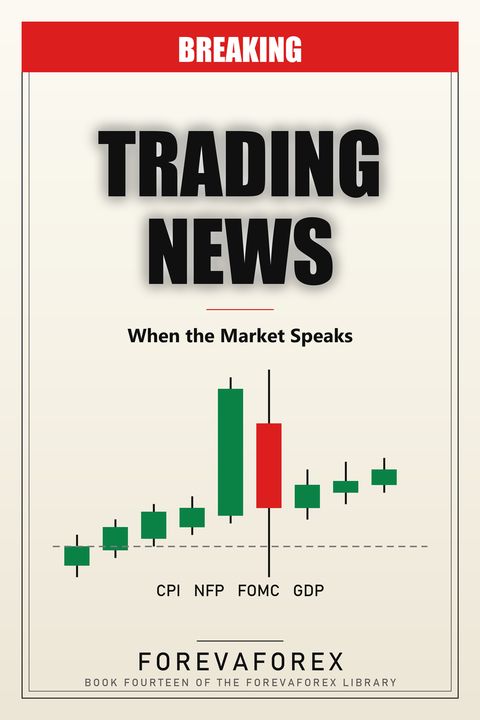
Trading News
How the market reacts to CPI, jobs reports, central bank decisions and other events, and how to handle spreads, slippage and volatility around them.
You learn when news is an opportunity and when it is a trap. Knowing when not to trade around a release will save you from some of the most expensive mistakes.
What is inside (18 lessons)
| 01 | Why News Moves Markets | 6 lessons |
| 02 | Reading The Release | 6 lessons |
| 03 | Trading Around The News | 6 lessons |
Free sample lesson: Why News Moves Markets
Economic news changes what traders believe about interest rates and growth, and beliefs drive prices. When new information arrives, the market reprices within seconds.
There are three points to hold onto. One, news changes expectations. Two, speed is extreme. Three, volatility follows.
One: News Changes Expectations
Data that differs from forecasts shifts what the market thinks central banks will do.
Two: Speed Is Extreme
Automated systems react in milliseconds, so most of the move happens almost instantly.
Three: Volatility Follows
Spreads widen and price whips as orders flood in.
For example, a jobs report comes out far stronger than forecast. Within seconds the dollar jumps 60 pips as traders raise their expectations for future rate increases.
Not every release is equal, so the first task is to know which ones matter.
Keep reading Trading News
Illustrated books, live tools and a practice hub. Free to start.